Reaction Game for 2–4 Players
Put the phone between you, everyone takes a pad, and wait. When the screen says TAP, the first to hit their pad wins the round. Jump the gun and you lose a point.
Tap a pad to start
First to 5 wins. Pressing before TAP costs you a point.
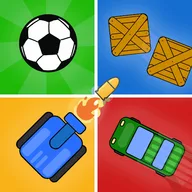
This is one idea. The app has 30.
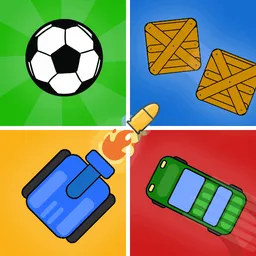
1 2 3 4 Player Games is built on exactly this: one device, a corner each, one simple control. 30 mini games, from tank battles and races to football, sumo and golf, with a bot to play against on your own. No accounts, no internet needed to play. Free to download.
How to play
Choose two, three or four players and lay the device flat where everyone can reach it. Tap a pad (or press Start) and the pads go dim while the screen says Wait for it. After a random wait of one and a half to four and a half seconds, everything lights up and the screen says TAP. The first pad pressed takes the point and shows how many milliseconds it took. Press before TAP and you lose a point instead. The first to five points wins, and a tap on any pad starts the next game.
Every pad listens for its own touch, so on a multi-touch screen two, three or four fingers can land at once and the page still knows which was first. On a laptop the keys are A, L, Q and P, one for each pad, which makes a decent two-player game on one keyboard.
Why one screen works for games like this
Games for several people on one device live or die by a single constraint: everyone is touching the same small screen at the same time. Anything with hidden information or long turns falls apart; anything with one simple control per player and short, loud rounds works. A reaction duel is the purest version of that, which is why it settles who goes first, who pays and who gets the front seat as well as any coin.
What a good time looks like
Most people land somewhere around 200 to 300 milliseconds here, a little slower than on a dedicated reaction test because a phone's screen and touch sensor add their own delay. Times drop with practice and climb when you are tired. Shaving them below about 150 ms usually means you are guessing, and guessing is exactly what the false-start rule punishes.
Questions
How do three or four people play on one phone?
Lay the phone flat on the table between you. With two players each takes an end; with three or four the screen splits into corners, and the pads on the far side are drawn upside down so everyone reads their own. A tablet is far more comfortable for four, and on a laptop the keys A, L, Q and P are the four pads.
What counts as a false start?
Pressing your pad while the screen still says Wait for it. It costs you a point (never below zero) and the round starts again, so guessing the moment does not pay. The wait is random, between 1.5 and 4.5 seconds, so there is no rhythm to learn.
How accurate are the times?
Good enough to settle an argument, not a laboratory. The clock starts on the frame that shows TAP and stops when the browser receives your touch, so it includes your screen's refresh and the touch sensor's own delay, a few tens of milliseconds. Everyone on the same device carries the same delay, so the race is fair.
Is it fair to the players on the far side?
Every pad is the same size and listens the same way, and the whole screen changes colour at TAP, so it can be seen from any seat. What is not equal is the reach: put the phone in the middle, where everyone's hand is the same distance away.